Ask what a deck costs and you will usually be told the installation price. That number is real, but it is not the cost of owning a deck. Timber needs treating for as long as you have it, boards age at different rates, and a softwood deck and a composite deck that cost different amounts in year one can land surprisingly close together by year fifteen.
We install both materials, so we have no interest in talking you into either. What follows is the comparison we sketch for customers at site visits, written out properly: a like-for-like cost model over 15 years for a typical London garden deck, with the assumptions in the open so you can argue with them.
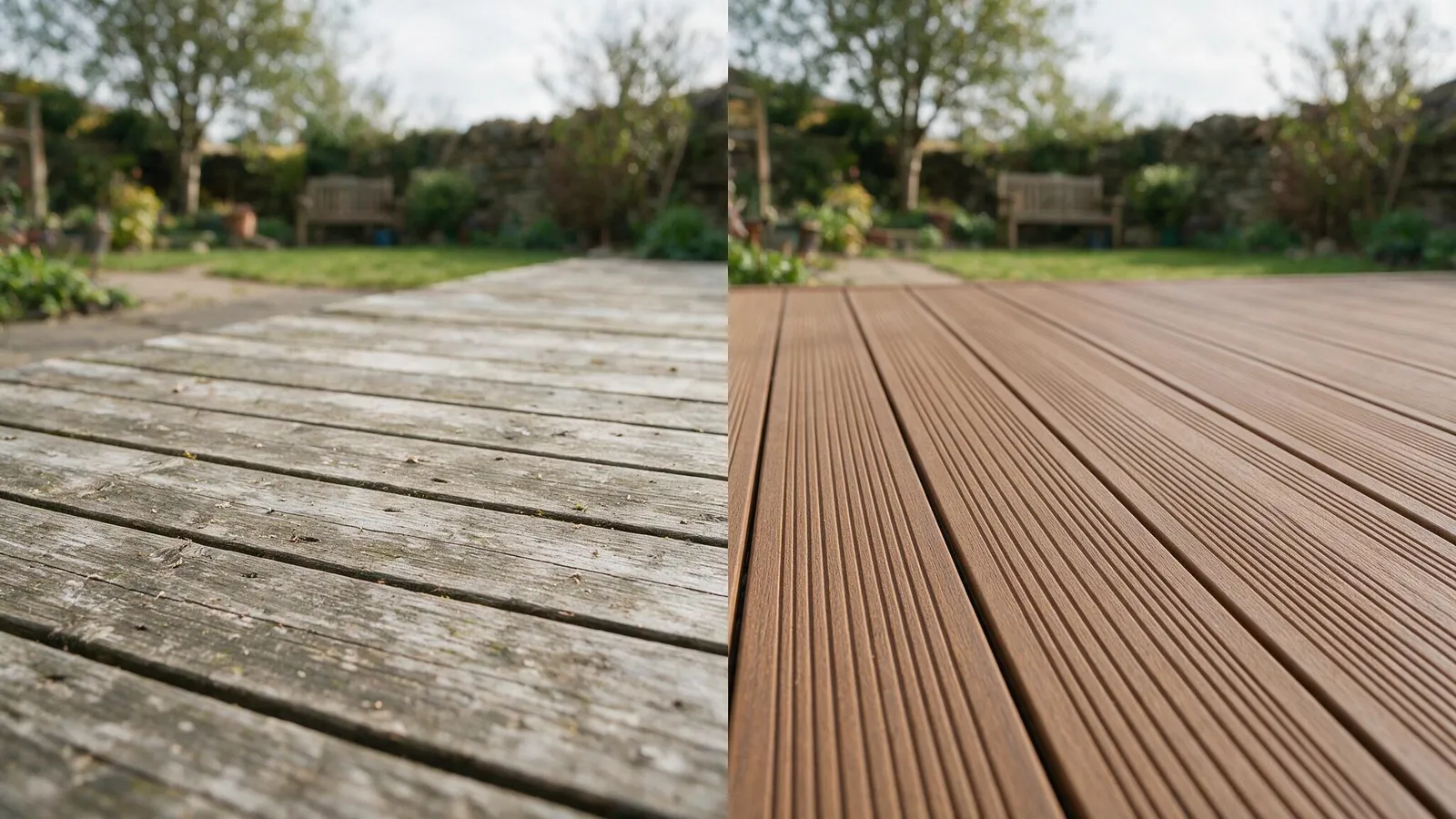
The assumptions, stated up front
Any cost model is only as honest as its assumptions. Ours are these:
- A straightforward rectangular garden deck of 25m², at or near ground level, with reasonable access. No balustrades, steps or lighting.
- Installed prices are the ranges we quote in London in 2026: pressure-treated softwood at £80–120 per m² and mid-range composite boards at £140–200 per m², both including sub-frame, fixings and labour.
- The timber deck is re-oiled or re-stained roughly every 18 months. Published guidance for softwood decking typically recommends treatment every 12 to 24 months, so 18 months is a middle course. That is 10 treatments over 15 years.
- Treatment costs assume you do it yourself: decking oils and stains commonly cost £20–30 per litre and cover roughly 6–10m² per litre per coat, which for two coats on 25m² works out at about £60–120 in materials each time. We also show what paying a professional does to the numbers.
- A repair allowance for the timber deck of £500–1,500 in the later years, covering replacement of individual weathered or split boards. This is an illustrative ownership-cost allowance, not a price for work we offer. We do not undertake small repairs or individual-board jobs; our service is full decking replacement. The composite deck gets a £0–200 allowance for incidental fixings.
- All figures are in today's money, with no inflation adjustment, and both decks are assumed to sit on a properly built sub-frame that lasts the full period.
Change any of these and the totals move. That is the point of showing them.
Year 0: installation
At 25m², pressure-treated softwood comes in at roughly £2,000–3,000 installed. Mid-range composite comes in at roughly £3,500–5,000 installed. The gap is real: composite costs about £1,500–2,000 more for the same deck on day one, and if the conversation stopped there, timber would win every time.
The conversation should not stop there.
Years 1 to 15: maintenance
Timber
Softwood decking left untreated goes grey, holds water and deteriorates faster, so regular oiling or staining is not cosmetic fussiness, it is what keeps the boards sound. At our assumed cadence of every 18 months, you will treat the deck 10 times in 15 years. At £60–120 in materials each time, that is £600–1,200 over the period, plus the repeated weekend of cleaning, drying time and application, which we would honestly estimate at one to two days per treatment.
Pay someone to do it instead and the arithmetic changes materially. Professional cleaning and re-treatment for a deck this size is commonly £150–300 per visit, which across 10 visits is £1,500–3,000 over the 15 years.
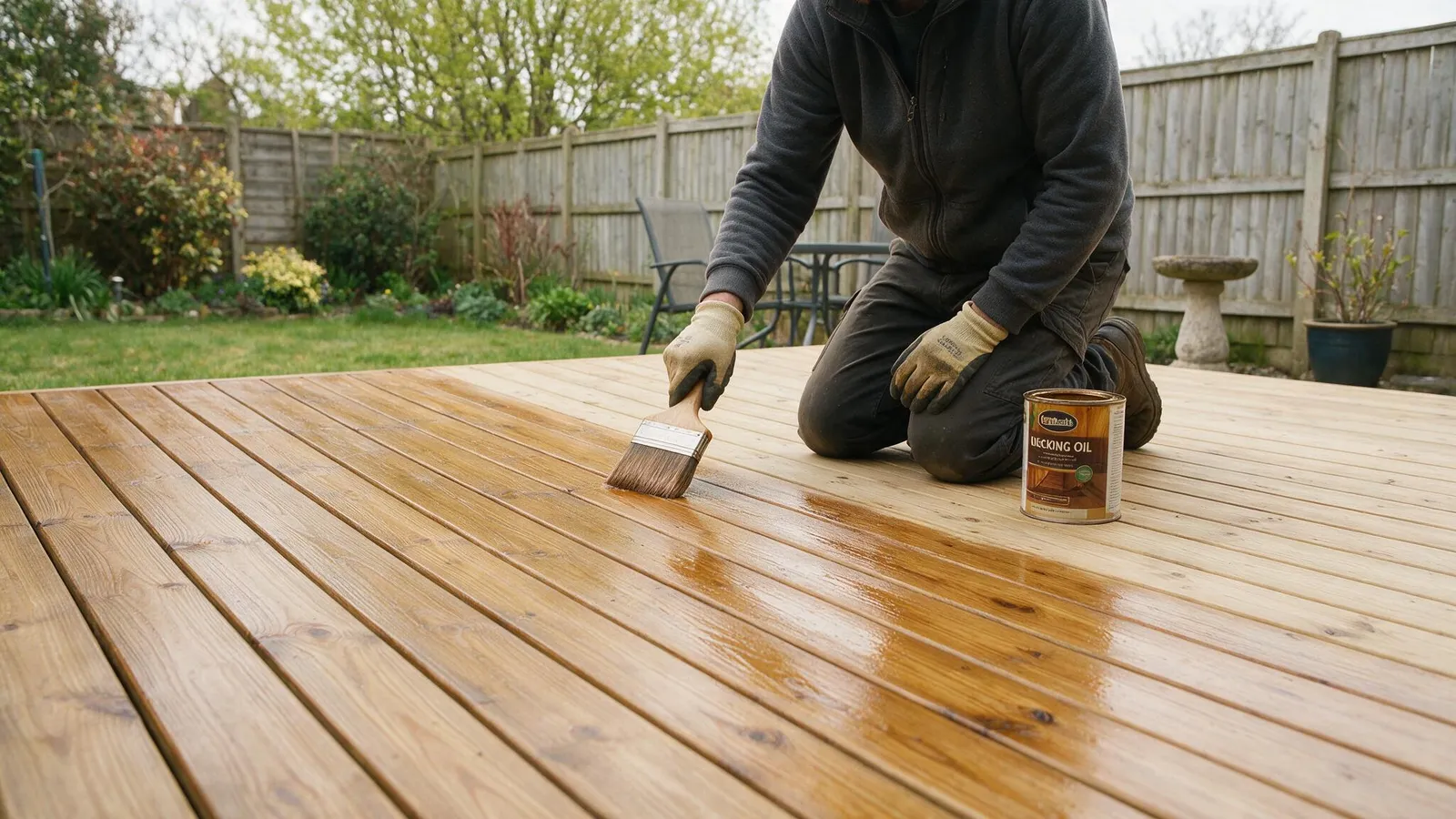
Composite
Composite boards do not need oiling, staining or sealing. Maintenance is a brush down and an occasional wash, which costs close to nothing beyond your time, and the same wash applies to a timber deck anyway before each re-treatment. We allow £0–200 across the whole period for odds and ends. This is the entire reason composite exists as a product category, and it is where the day-one price gap gets repaid.
The 15-year totals
| 25m² deck, 15 years | Softwood timber | Mid-range composite |
|---|---|---|
| Installation | £2,000–3,000 | £3,500–5,000 |
| Treatment, DIY materials (10 treatments) | £600–1,200 | £0 |
| Repair allowance | £500–1,500 | £0–200 |
| 15-year total (DIY maintenance) | £3,100–5,700 | £3,500–5,200 |
| 15-year total (professional maintenance) | £4,000–7,500 | £3,500–5,200 |
| Your time on maintenance | Roughly 10–20 days | A few hours a year |
Illustrative cost model based on the assumptions stated above, using our 2026 London installed price ranges and published UK material costs. Your figures will differ with deck size, board choice and treatment habits. This table is a calculation, not a photograph of any particular project.
What the totals do not show
Two things sit outside the table and both favour composite, which is why we flag them explicitly rather than burying them in the totals.
First, condition at year 15. Published lifespan guidance for well-maintained softwood decking is typically 10 to 15 years, sometimes stretching to 20 with diligent care. At the end of our comparison window, the timber deck is approaching the end of its expected life and a replacement decision is on the horizon. Quality composite boards commonly carry 25-year residential warranties, Millboard being a well-known example, so the composite deck at year 15 is mid-life. Extend the model to year 20 or 25 and timber has to absorb a second installation cost that composite does not.
Second, the value of your time. Ten to twenty days of cleaning and treating over 15 years is either a rewarding bit of garden ownership or a recurring chore you will quietly start skipping, and skipped treatments can shorten the useful life of softwood decking. Only you know which owner you are, but the model assumes the maintenance actually happens.
Where timber still wins
This is not a sales piece for composite. If your budget is fixed at the lower end, timber gets you a professionally built deck now for £1,500–2,000 less, and no amount of lifetime arithmetic changes what you can spend today. If you positively enjoy the maintenance ritual and want the look and feel of real wood underfoot, timber delivers something composite genuinely does not, and hardwoods such as Ipe or Garapa, at £180–280+ per m² installed, push lifespan well beyond softwood if you keep up the oiling. And if you expect to move house within a few years, you may never see the payback period that makes composite add up.
The honest summary
On our stated assumptions, softwood timber with DIY maintenance is the cheapest route through 15 years in cash terms, by a few hundred pounds at the midpoints, but it costs you 10–20 days of labour and hands you a deck near the end of its life. Composite costs more up front, roughly matches or beats timber once professional maintenance enters the picture, and finishes the period with a decade of warranted life still ahead. Over any window longer than 15 years, composite is very hard to beat on cost.
If you want the model run for your actual garden, with real measurements and the boards you are considering, that is exactly what our free site visits are for. See our composite decking and timber decking pages for current installed price ranges, or get in touch for a quote.